
What is a Concussion?
A concussion is a type of brain injury caused by a blow or bump to the head. It often occurs during activities like sports, falls, or accidents.
While concussions are generally not life-threatening, they can disrupt normal brain function and require rest and proper care to prevent further injury. Repeated concussions can lead to more serious long-term health issues.
What are Concussion Symptoms?
Concussion symptoms can vary depending on the type and severity of the injury. With six different types of concussions, the effects can range from mild to severe and impact various aspects of brain function. Each type may cause a unique combination of symptoms that affect physical, cognitive, and emotional health. Early detection and proper medical evaluation are crucial for ensuring appropriate treatment and recovery.
Connect with Cerebral Health today if you’re experiencing symptoms of a concussion.
Below are the 6 types of concussions and their associated symptoms;
6 Types of Concussions and Their Symptoms
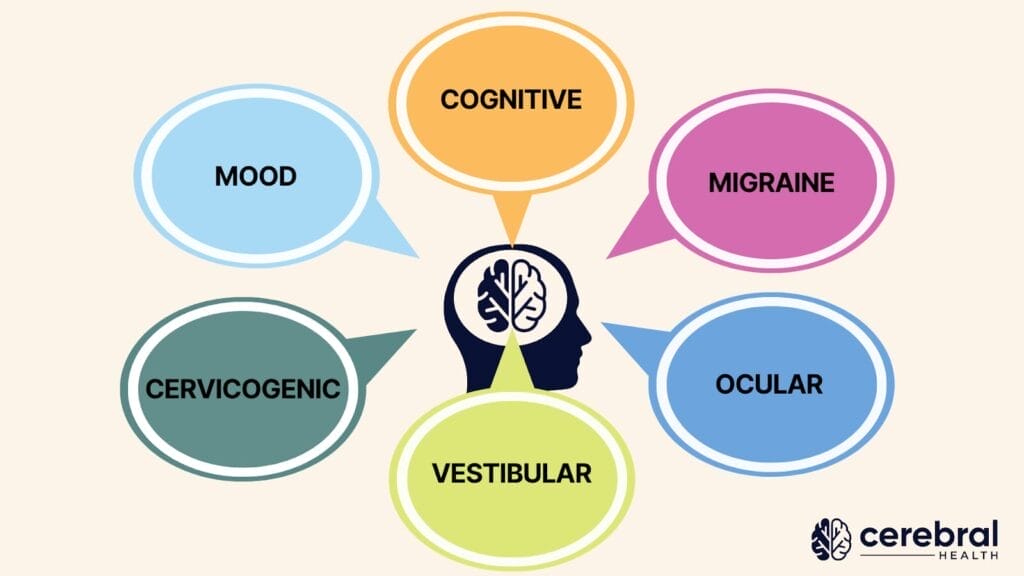
- Cervical Concussion
Caused by a sprain in the cervical spine, often worsened by poor posture or carrying heavy backpacks. Symptoms include:- Headaches
- Neck stiffness
- Dizziness
- Ocular Concussion
Affects visual tasks and causes:- Eye pain
- Eye strain
- Difficulty reading
- Vestibular Concussion
Causes dizziness, imbalance, and vision issues. Symptoms include:- Nausea
- Eye strain
- Spatial impairment
- Mood or Anxiety Concussion
Often worsened by stress or a family history of anxiety. Symptoms include:- Excessive worrying
- Rumination
- Abnormal sleep patterns
- Cognitive Concussion
Impairs mental tasks, attention, and memory. Symptoms include:- Slurred speech
- Irritability
- Convulsions
- Post-Traumatic Migraine
Appears up to seven days after injury. Symptoms include:
- Memory issues
- Poor concentration
- Personality changes
Understanding the different types of concussions and their symptoms is essential for recognizing the severity and impact of the injury. While symptoms can vary, they can significantly affect your physical and cognitive abilities.
As you recover, it’s important to consider how certain activities, like flying, can complicate the healing process.
In the next section, we’ll explore why it may not be safe to fly with a concussion and how factors like cabin pressure and dehydration can worsen symptoms during your journey.
Is it Safe to Fly With a Concussion?
Sometimes you can fly with a concussion, but it is important to be aware of the risks. Flying with a concussion can be risky because changes in cabin pressure may worsen dizziness, headaches, and balance problems.
Additionally, increased sensitivity to light and sound can be aggravated, and the dry air in the cabin can cause dehydration, further slowing recovery.

Flying with a concussion can worsen symptoms due to pressure changes. It’s important to consult a doctor before flying and take precautions like staying hydrated and resting. Image source
Here’s the list of reasons why it may not be safe and why it may be safe:
Reasons Why It May Not Be Safe To Fly With a Concussion:
- Cabin Pressure Changes
The pressure fluctuations during a flight can intensify symptoms like dizziness, headaches, and balance problems. These changes may affect the vestibular system, which is responsible for balance and spatial orientation.
- Increased Sensitivity
After a concussion, the brain may be more sensitive to external stimuli like light and sound. Flying, especially at night or in crowded spaces, can trigger vertigo episodes or worsen vestibular migraines.
- Dehydration
Airplane cabins are dry, which can lead to dehydration. Dehydration can make dizziness and fatigue worse and may impair the body’s ability to recover, particularly if you’re still dealing with symptoms of a concussion.
- Limited Medical Assistance
In the event your symptoms worsen during the flight, it may be harder to receive immediate medical attention, especially if you’re experiencing a spinning sensation or severe balance issues.
Reasons Why It May Be Safe To Fly With a Concussion:
- If You Have a Mild Concussion:
If your concussion symptoms are mild, and you’ve been cleared by a healthcare provider, flying may be safe. However, it’s essential to ensure that you’re not experiencing symptoms like nausea, memory problems, or balance dysfunction.
- If You Hydration and Rest:
Staying hydrated with water or coconut water and taking breaks to rest can help manage symptoms while flying. Avoiding caffeine and alcohol can help maintain hydration and minimize dizziness.
- Allowing for Good Timing:
Flying a few days after the injury, when symptoms are under control, may be acceptable. It’s essential to follow your doctor’s advice and be mindful of any lingering issues.
How to Know If It’s Safe:
- Consult Your Healthcare Provider:
Always get approval from your doctor or a qualified healthcare provider before flying, especially if you still have vestibular symptoms like dizziness or inner ear issues.
- Monitor Your Symptoms:
If symptoms like headache, nausea, dizziness, or memory problems are present, it’s best to delay flying until they subside.
- Follow Post-Concussion Guidelines:
Adhere to the rest protocols provided by your healthcare provider and avoid activities that could aggravate your symptoms.
Flying with a concussion requires careful consideration. Changes in cabin pressure, dry air, and heightened sensitivity to light and sound can worsen symptoms. This guide provides essential tips to help manage your condition and ensure a safer, more comfortable journey. Image source
Tips for Flying With a Concussion:
Consult Your Healthcare Provider:
Before booking a flight, get clearance from your doctor. If you’re still experiencing dizziness, headaches, or memory issues, it may be best to wait until you’re fully recovered.
Stay Hydrated:
Dehydration can worsen balance problems and fatigue. Drink plenty of water before and during the flight. Consider electrolyte drinks or coconut water to help maintain fluid balance and avoid dehydration.
Avoid Caffeine and Alcohol:
Both caffeine and alcohol can dehydrate you and trigger migraines or vertigo attacks. Stick to water or herbal teas to stay hydrated and reduce the risk of worsening symptoms.
Wear Sunglasses and Noise-Cancelling Headphones
Bright lights and loud noises can worsen light sensitivity or vestibular migraines. Sunglasses and noise-canceling headphones can help minimize these triggers.
Take Breaks and Rest:
During the flight, take breaks to close your eyes and rest. Avoid any strenuous activity or sudden head movements that could trigger vertigo episodes.
Avoid Sudden Head Movements:
Quick head movements, such as looking around rapidly or changing head position quickly, can trigger dizziness or spinning sensations. Keep your head steady and take it slow.
Sit in a Comfortable Position:
Choose a seat that allows you to sit comfortably, with good neck support. Proper positioning can help reduce the risk of triggering balance issues or discomfort.
Bring Medications or Supplements:
If your doctor has prescribed any medications or supplements for dizziness, migraines, or other symptoms, make sure to carry them with you. Having these on hand can provide relief if symptoms arise during the flight.
Plan for Post-Flight Rest:
Upon arrival, give yourself time to rest and recover from the flight. Traveling can be tiring, and it’s important to allow your brain and body to recover once you land.
Resources on How to Recover from a Concussion:
Recovering from a concussion takes time and care. Follow these tips for a smoother recovery: rest, limit screen time, gradually return to activity, and stay hydrated. Your brain needs time to heal, so be patient and listen to your body. Image source
This blog offers a guide to treating positional vertigo (BPPV) using the Dix Hallpike and Epley Maneuver to reposition crystals in the inner ear and relieve dizziness. If symptoms persist or treatment doesn’t work, it’s important to consult a healthcare provider for further evaluation.
This resource provides essential care instructions for concussion and mild traumatic brain injury focusing on rest, hydration, and gradual return to normal activities. It emphasizes monitoring for serious symptoms and when to seek medical attention, especially during the first 48 hours. The guide also offers tips on managing pain, avoiding alcohol and caffeine, and the importance of not rushing back into physical activities or driving until fully recovered.
This blog provides a detailed overview of concussions, including their causes, common symptoms, and the recovery process. It emphasizes the importance of rest, a gradual return to normal activities, and professional support to manage symptoms, ensuring a full recovery after a head Injury and concussion recovery.
Recovering from a concussion involves making lifestyle adjustments to support healing. Key changes, such as prioritizing rest, limiting screen time, and avoiding physical strain, are essential for a smooth recovery and reducing the risk of prolonged symptoms.
Lifestyle Adjustments to Make After a Concussion:

Adjusting your lifestyle after a concussion is crucial for healing. Prioritize rest, limit screen time, stay hydrated, and ease back into activities. Image source
- Limit Screen Time:
Avoid watching TV, using your phone, or working on a computer for extended periods. The bright lights and concentration can make symptoms worse. Try to take breaks every 20-30 minutes if you need to use screens. Limiting screentime to avoid concussion
- Sleep Regularly:
Make sure to get 7-9 hours of sleep every night. It’s important to maintain a consistent sleep schedule, going to bed and waking up at the same time each day to help your brain heal. The Importance of Sleep for Concussion Recovery
- Avoid Alcohol:
Drinking alcohol can make your symptoms worse by impairing your brain function and delaying recovery. Stay away from alcohol during your recovery to ensure you heal properly. Why Avoid Alcohol After a Concussion
- Don’t Take Pain Relievers Without Doctor Approval:
Avoid using over-the-counter pain relievers like ibuprofen or aspirin, as they can increase the risk of bleeding. Consult your doctor before taking any medication for headaches or pain. Pain Management and Concussion
Flying with a concussion can be risky, particularly if symptoms like dizziness, headaches, or vertigo persist. It’s essential to consult your healthcare provider before traveling, stay hydrated, avoid caffeine and alcohol, and take necessary precautions to minimize symptoms during your flight. By following the right steps and monitoring your condition, you can ensure a safer recovery journey.
Take the next step toward recovery — Schedule your complimentary consultation with NorCal Brain Center today!